

Pipe Stanchion Replacement Part 2: Learning in the Field



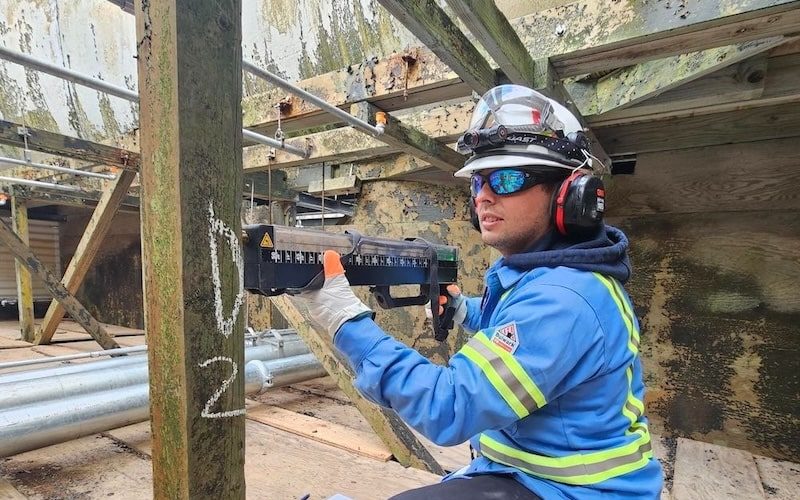
In Part 1 of this series I wrote about my first project as a recent graduate working for Brindley Engineering. Some time has passed, and I wanted to revisit this piece and talk about further reflection I had on this project. When the RTF 2084 pipe stanchion project moved from design to construction, it marked a major milestone in my career. I had already spent months developing the structural design, but seeing it transition from drawings to real steel in the field was an entirely different experience — and one I’ll never forget.
From Calculations to Construction
During construction, my role shifted from running calculations to actively supporting the field. I worked directly with inspectors, fabricators, and contractors to answer questions and resolve issues as they arose. In an operating refinery, no two days look the same, and I quickly learned how important clear communication and fast decision-making are to keeping a project moving safely.
There were field conditions that didn’t perfectly match what we had seen in earlier scans and measurements. Working through these issues and helping develop solutions in real time was one of the most valuable learning experiences I’ve had as an engineer.
What This Project Taught Me
This project pushed me both technically and professionally. I learned:
- How important it is to create drawings that are not only accurate, but also easy to build from
- How to communicate technical changes clearly under real-world time constraints
- How much collaboration matters between engineering, construction, and operations
Most importantly, I learned to trust my engineering judgment while staying flexible when conditions changed.
Seeing the Structure Stand
There is nothing quite like walking out into the unit and seeing a structure you designed standing in the field. Watching the stanchion get erected piece by piece was a moment of pride I won’t forget. It made all the late nights of calculations and reviews feel incredibly meaningful.
What I Have Been up to Since Writing About This Project
A great deal of valuable and interesting experience has been gained since that project. I participated in the structural inspection of a collapsed cooling tower and was part of the engineering team that assessed its condition and determined the cause of failure. I also managed a construction site for several months in the southern United States and led structural integrity inspections of cooling towers and production line buildings at client sites outside the country. In addition, I completed a wide range of complex steel and concrete design and analysis tasks while managing rehabilitation projects across multiple client sites in both the Midwest and the southern United States.
3 things that have been a focus for me since the original article was written:
- Constructability: A key focus, especially when working in heavy industrial environments. It ensures that a project is designed to be built efficiently, safely, economically, and in accordance with the intended design, while effectively bridging the gap between design and construction. Understanding constructability helps anticipate potential challenges during project execution, reduces construction issues, saves time and costs for the client, and, most importantly, enhances safety.
- Communications (Coordination/Collaboration): Effective communication helps bridge the gap between structural engineering and other disciplines such as architectural, mechanical, and electrical. It enabled me to review drawings from other trades, participate in coordination meetings, and integrate various systems to prevent potential conflicts during both design and construction. Strong multidisciplinary communication is especially critical on complex projects, as identifying issues early can save significant time and cost while ensuring all design components work together seamlessly.
- Element Detailing and Documentation: Transitioning from conceptual dimensions to accurate, buildable drawings allowed me to focus on finalizing connections, material specifications, and producing detailed drawings for specific structural elements. This process reduces on-site ambiguity, ensures correct material application, and verifies compliance with strength and serviceability code requirements.
Looking Ahead
This, and the projects I have worked on since this project confirmed for me that structural engineering is exactly where I want to be. Being trusted with the responsibility of a lead role so early in my career was both challenging and rewarding, and I’m grateful for the support and mentoring I received through the process from my teammates and from Brindley Engineering as a whole. Projects like the RTF 2084 pipe stanchion replacement are a big reason I’m proud to be part of the Brindley Engineering team. I’m excited to continue learning, growing, and contributing to projects that make a real impact.
— Kazimierz Boloz, Structural Reliability Engineer IV, Brindley Engineering
Share this post