

The Importance of Industrial Fireproofing Safety Evaluations - Part 1 of our “5 Essential Fireproofing Questions Series”



Structural fireproofing reliability is an important safety feature in any organization. There is a myriad of fire protection materials, application companies, and methods out there, and each one spans a wide budget spectrum. Many leaders don’t know where to start. Here is a guide to 5 essential questions you should be considering when researching your options and formulating your passive fire protection plans.
Question 1: What Are the Risks of Failing Fireproofing in Industrial Facilities?
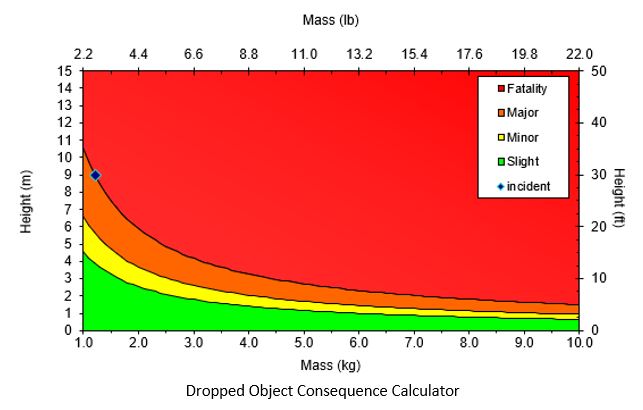
Industrial facilities go to great lengths to mitigate the risk of falling objects, such as “nesting” an elevated work site, using barricades or safety tape, and a host of other measures to ensure the safety of those below. But many of these same facilities do not have an adequate structural and fireproofing evaluation and maintenance program, the lack of which greatly increases the odds of a falling-object incident. To put it in perspective, a piece of concrete the size of an apple falling approximately 30 feet could result in a fatality if it hits an individual, even if wearing standard PPE1. Not only is there a risk to people, but falling concrete can also damage equipment, such as a horizontally mounted pressure gauge, which could break off if struck by falling concrete and result in a loss of primary containment. Even mid-size facilities can have miles of concrete fireproofing and reinforced concrete structures, so the risk is widespread.
In addition to the safety of individuals working within and near these units, there are economic dangers as well. Falling fireproofing is a sign of poor craftsmanship or general deterioration. Either way, if fireproofing is in poor enough condition to be falling off the structure, then typically the underlying structure is in an advancing state of deterioration. Brindley Engineering has evaluated tens of thousands of individual structures within industrial facilities and have found columns that are free-floating and no longer connected to their foundations, beams without flanges or webs, equipment anchors so corroded then shatter on impact, and a host of other problems. When deterioration advances unchecked, there are dangers of collapse and significant cost ramifications to repair.
Note 1: Average apple diameter of 2.7 inches per Wikipedia. Concrete density of 490 pcf. Impact effect per Dropped Object Consequence Calculator (2018) (see www.dropsonline.org)
Talk to Lead Structural Engineer, Nick Triandafilou:
- Email: ntriandafilou@brindleyengineering.com
- Phone: 630-796-2020
More From Our Industrial Fireproofing Series:
- Read Part 1: What are the risks of failing fireproofing in industrial facilities?
- Read Part 2: What are the advantages and disadvantages of different types of fireproofing?
- Read Part 3: What amount of fireproofing deterioration requires replacement?
- Read Part 4: Our fireproofing appears to be in poor condition. Are our structures protected?
- Read Part 5: Where is Fireproofing Needed in Industrial Structures?
Share this post